
Department of Arts and Letters
GP-Food 2nd Batch Student
With gentle breeze carrying a rose-like scent of freshly washed laundry, Oxford revealed itself as a peaceful town guarded by soft, winding hills. During my overseas training program there, attending the 32nd Annual Meeting of the Society for the Study of Ingestive Behavior (SSIB) at the University of Oxford became not only one of the main goals of the trip, but also one of the most meaningful experiences.

What is SSIB and Who did I encounter there?
SSIB is an international research community dedicated to the study of food and fluid intake. Its annual meeting brings together researchers from diverse fields, including neuroscience, physiology, psychology, and nutrition science. The conference provided an interdisciplinary atmosphere where scientific ideas, cultural perspectives, and new methods were openly exchanged.
The participants included researchers from world-leading institutions such as the University of Pennsylvania, Yale University, Johns Hopkins University, the University of California system, the University of Oxford, and the University of Cambridge. Researchers from Japan, including those from Kyoto University and Tohoku University, were also represented. Being in this global academic environment allowed me to experience how research questions and interpretations vary across cultures, while still sharing the same scientific rigor and curiosity.
What Research Topics Were Most Discussed?
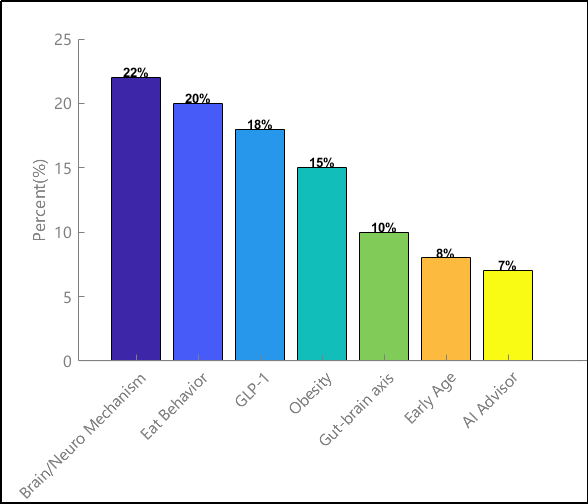
The presentations covered a wide range of topics related to ingestive behavior, including brain mechanisms, eating habits, obesity, gut–brain communication, and GLP-1 signaling.
More than forty studies explored neural mechanisms involving structures such as the amygdala, hypothalamus and prefrontal cortex, as well as neuron types such as AgRP and POMC cells. These studies demonstrated how complex the brain’s role is in regulating appetite, reward, and food-related decisions.
Eating behavior was another major theme, with studies examining social eating, appetite regulation, binge eating, anorexia, and sensory responses to sweetness. These talks highlighted that food is not only biological—it is also cultural, emotional, and social.
Obesity research focused on both biological and environmental influences, including high-fat and high-sugar diets, early-life experiences, physical activity, and the effects of sugar dependence.
One of the most memorable topics for me was research on the gut-brain axis. I learned that early-life factors—such as infection, birth delivery mode, and environmental stress—shape the gut microbiota, and that microbial diversity naturally declines with aging. Stress was shown to affect gut-brain communication at every life stage. Several presentations proposed a diet–microbiota–gut–brain axis, suggesting that neural pathways related to eating and decision-making may shift based on nutrition and gut environment. This perspective helped me see how small biological influences can accumulate into significant behavioral outcomes.
Presentation of our work
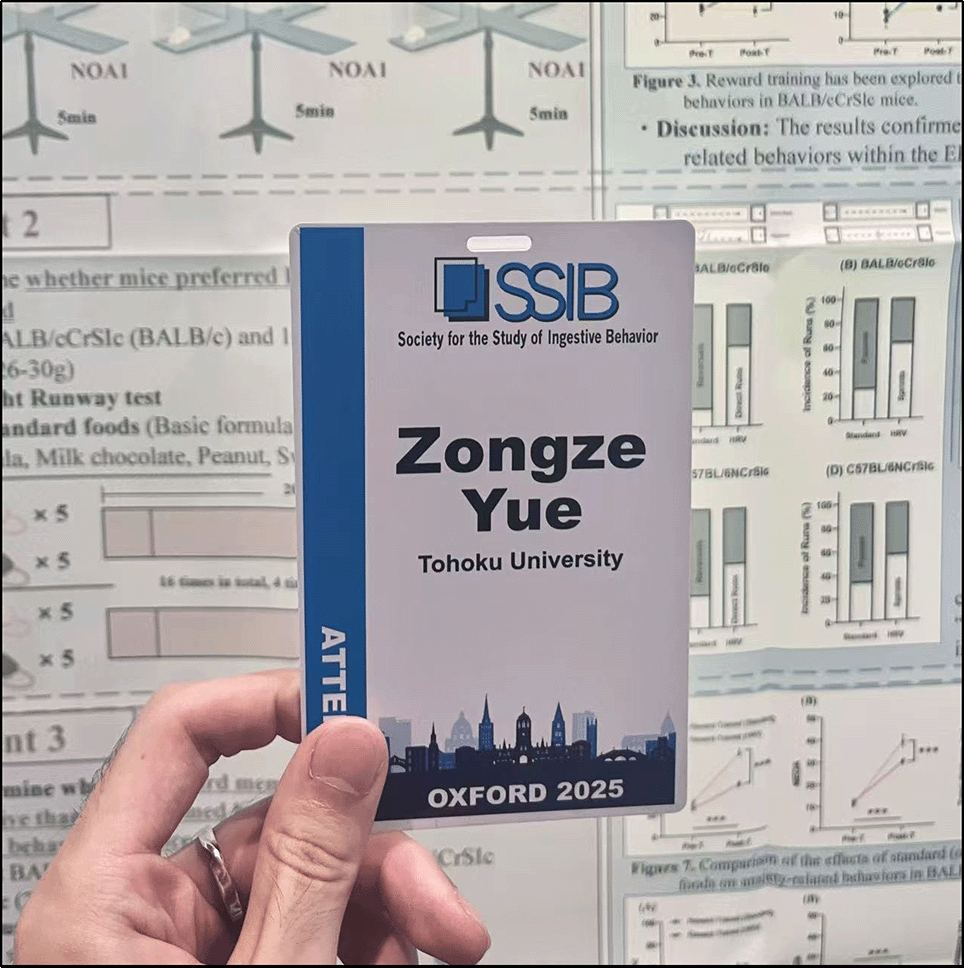
In addition to attending lectures and discussions, I also had the opportunity to present my own research during the conference. My presentation focused on how food-associated reward memory influences emotional regulation, particularly anxiety-related behavior in mice. Our findings demonstrated that food-associated reward memory can attenuate anxiety-related responses in mice, and importantly, that the reward value of food plays a key role in determining the strength of this effect. Presenting this work to an international audience not only allowed me to receive expert feedback but also deepened my understanding of how reward circuits, emotional regulation, and eating behavior are interconnected at both behavioral and neural levels.

Reflection
Thanks for GP-Food offering me this precious opportunity to have overseas communications. This experience deeply influenced how I think about research. Also, the interaction between biology, culture, and behavior became clearer and more meaningful to me. Especially, engaging with researchers from different countries broadened my perspective and encouraged me to consider expanding my scientific career into an international setting.