
@Taiwan
GP-Food Members Underwent Training in Taiwan
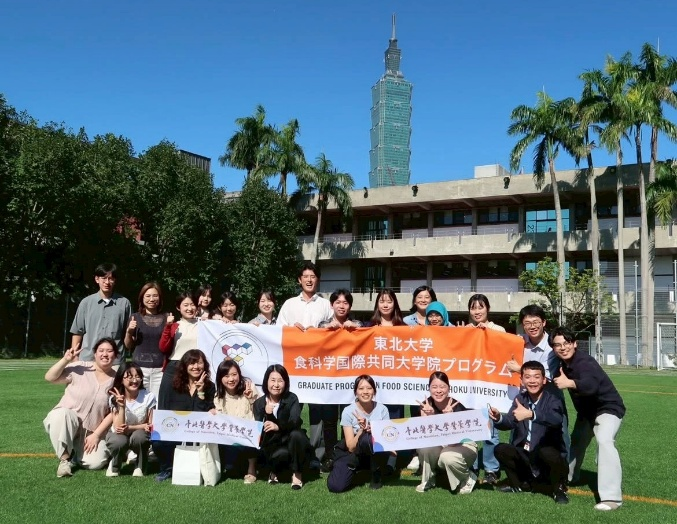
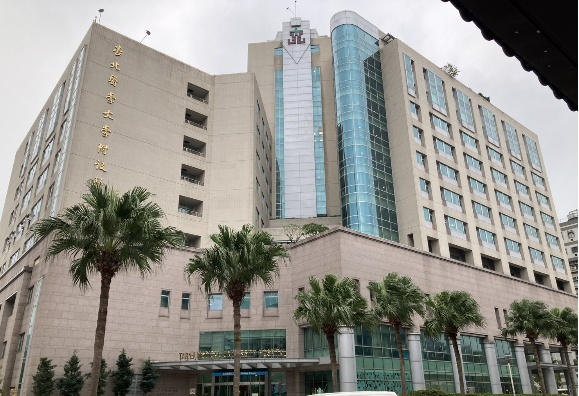
This training program was held over six days, from November 2 to 8, 2025, primarily at Taipei Medical University (TMU). It aimed at providing participants with experience in research activities in Taiwan and to cultivate an international perspective. The program included a wide range of activities, such as research presentations, factory visits, tours of TMU’s facilities, attendance at classes, and exploration of local food culture. In the following sections, I describe in detail the insights I gained through this program.
A More Established Culture of Taking Gap Years Than in Japan
Many TMU students take a gap year—by taking a leave of absence after earning their course credits—to focus on what they want to pursue or to devote time to job hunting. In Japan, it is common for master’s students to begin job hunting almost immediately, spending about a year on the process. As a result, research activities often become secondary. I have always felt uncertain about this aspect of Japanese academic culture. Therefore, the Taiwanese approach—conducting research thoroughly during the master’s program and beginning job hunting only after completing one’s research—felt highly reasonable to me. In my case, I expect to search for a job during my doctoral studies, but I also strongly wish to devote myself to research. Learning about the option of taking a gap year through this program was thus a valuable insight.
Technical Staff Supporting Instrument Measurement in TMU
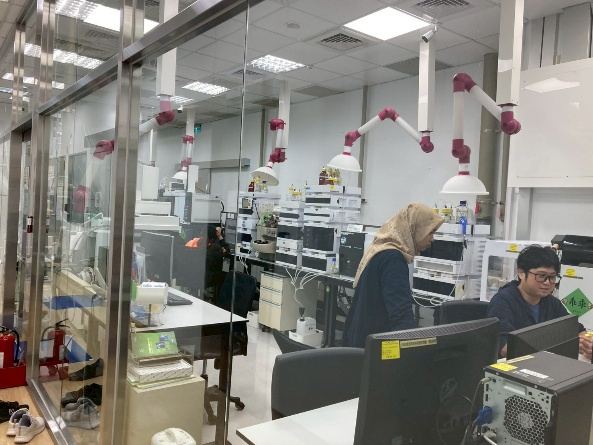
I was often unsure how to operate certain instruments or how to optimize experimental conditions, so having dedicated staff who are knowledgeable about the equipment seemed like a remarkably beneficial system. I also learned that students are required to have a certain level of understanding before using major instruments, and paper tests are administered for this purpose. At my home institution, students typically study the principles of measurement independently, so having a structured paper test with clear answers struck me as a highly efficient way to learn.
Renewed Motivation for Research Inspired by the KAVALAN Distillery Tour
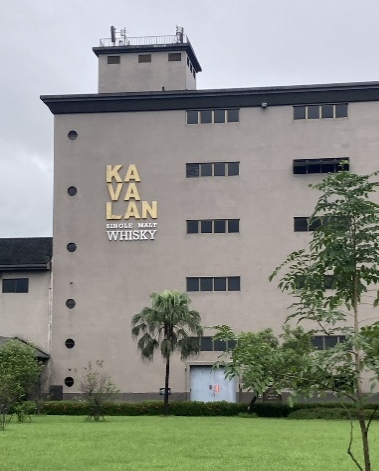
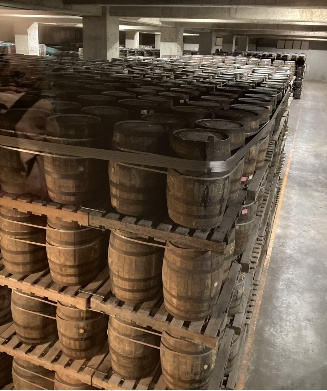
Although KAVALAN is a relatively young whisky distillery, founded in 2005, it has gained worldwide recognition by winning nine major international awards over the past decade. Whisky is typically produced in colder regions such as Scotland but motivated by Taiwan’s accession to the World Trade Organization and a growing admiration for overseas distilleries, whisky production in Taiwan was initiated. Producing whisky in Taiwan came with several challenges, including 1) a much shorter maturation period than in colder climates and 2) a significantly higher evaporation loss—known as the “angel’s share”—during aging. Nevertheless, KAVALAN overcame these difficulties and succeeded in creating whisky unique to a subtropical environment, which left a strong impression on me.
What I realized through the tour of the KAVALAN distillery was that I am in the midst of embarking on a “new challenge.” As my research gradually became part of my daily routine, I had begun to forget that my research represents a pioneering effort—something being attempted for the first time in the world—with the potential to grow and expand globally. Seeing KAVALAN’s success up close allowed me to draw parallels with my own research and reminded me to approach my research with renewed enthusiasm and hope.
Moreover, just as KAVALAN produces whisky made possible precisely because of Taiwan’s subtropical climate, I came to feel that in the future I want to pursue a career that leverages the strengths I gain from accumulating diverse experiences—something only I can uniquely contribute.
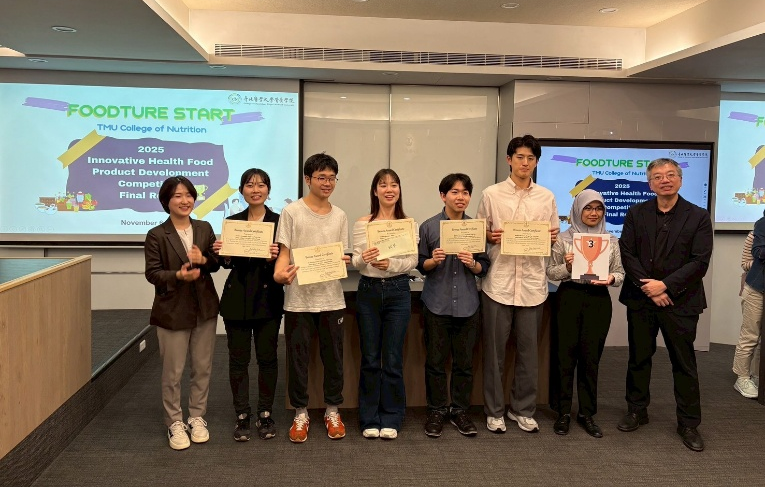
Earning a Bronze Prize—and Learning Even More from Outstanding Presentations
In the final round of a functional food competition held on November 6, a total of nine groups—including our own—gave presentations proposing original functional food products. Although our group ultimately received the Bronze Award, the event was an excellent opportunity to be inspired by the other teams. Each presentation went beyond simply incorporating functional ingredients; they also addressed environmental considerations, ease of consumption, and even social issues I had never previously focused on. Their ideas were truly fascinating.
What impressed me most, however, was the quality of their presentation skills. The slides were beautifully designed and polished, and although the presentations were delivered in Chinese, the speakers’ persuasive and TED-talk-like delivery left a lasting impression on me.
While the style of these presentations differed from typical academic conferences, they offered many valuable insights into how to convey content effectively. Recently, I have tended to give presentations that follow a fixed, conventional format, so this experience significantly strengthened my motivation to improve my presentation skills. I hope to develop the ability to present to audiences outside my field with the same level of clarity and impact demonstrated by the TMU students.
Strengthened Motivation to Pursue an International Career
Through this program, I gained a deep appreciation for the many strengths of Taiwan and felt an even stronger aspiration to conduct research on an international stage. While I learned many valuable lessons, what left the strongest impression on me was the sense of “excitement” that comes from connecting with people abroad and experiencing different cultures. Although I still face challenges with my English proficiency, this experience strengthened my determination to continue striving toward my goal of contributing internationally.
Postscript
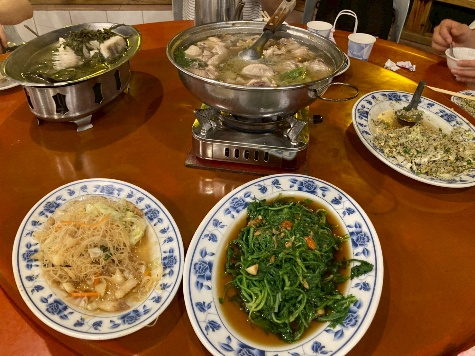
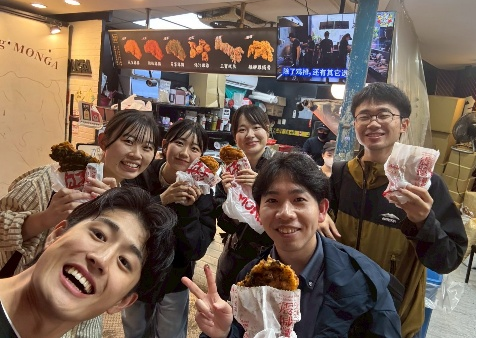
Outside of the official training program, I also enjoyed various sightseeing activities and meals. Among the most memorable moments were having dinner at Maokong while overlooking the night view and performing a comedy skit at the farewell party. Attending lectures by TMU professors made me realize that most of TMU’s academic fields align closely with my own interests. Since I have always been interested in medical-related areas, TMU felt particularly appealing to me.
I am truly glad that I had the opportunity to visit Taiwan and TMU, a place filled with delicious food, kind people, and academic fields that match my interests. If I have a chance, I would definitely like to visit again.
I would like to express my gratitude to everyone involved in this program.
By Yajima Yui